3D anatomy for students
Your anatomy course.
In 3D.
Explore the body. Build your course checklist. Practise the structures you need to know.
Male and female models · Free atlas access
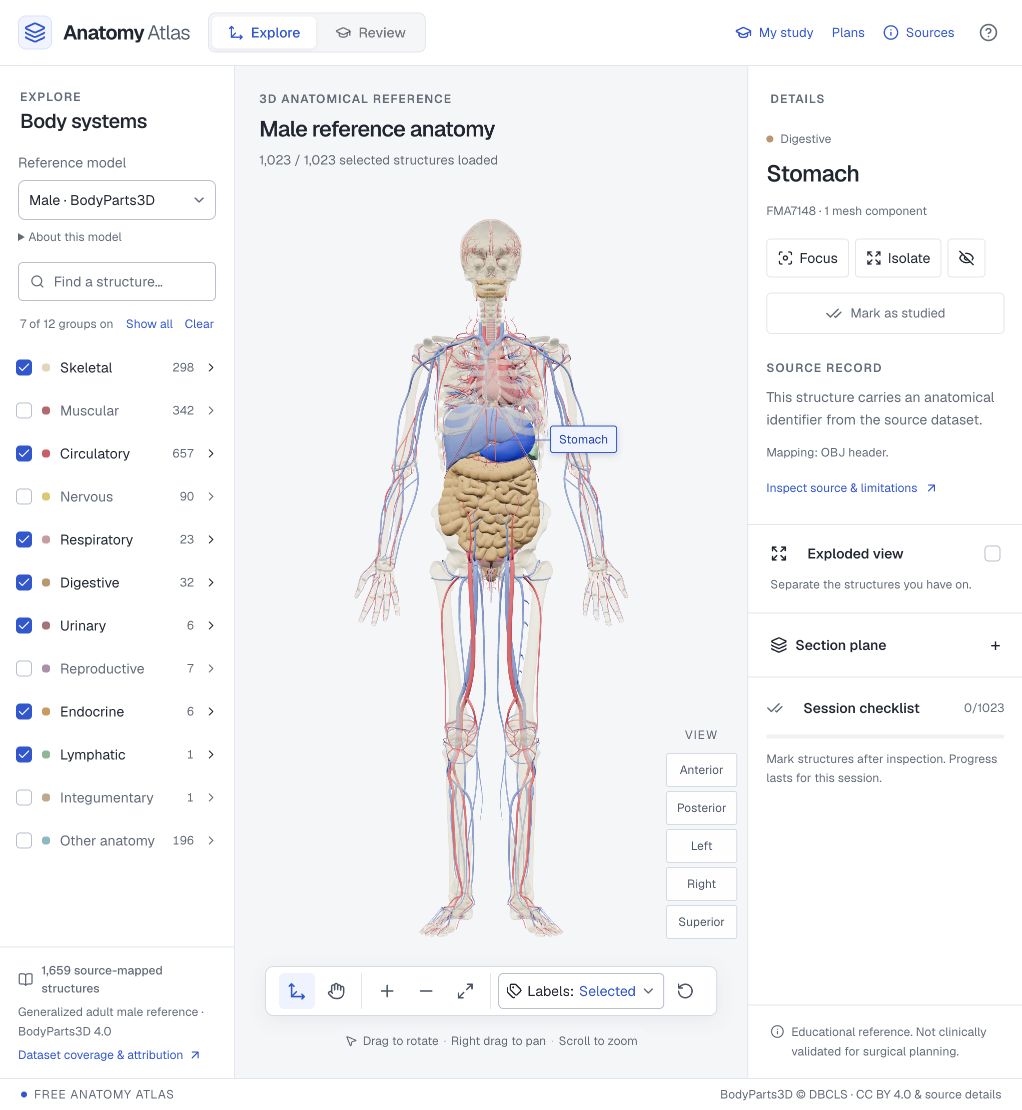
- 01
See where it belongs.
Explore each structure in the body. Hide a system, move closer, or separate the parts.
- 02
Study your course.
Choose the structures on your syllabus. Save them in a checklist.
- 03
Know what to review next.
Answer 3D questions. Your review list updates as you practise.
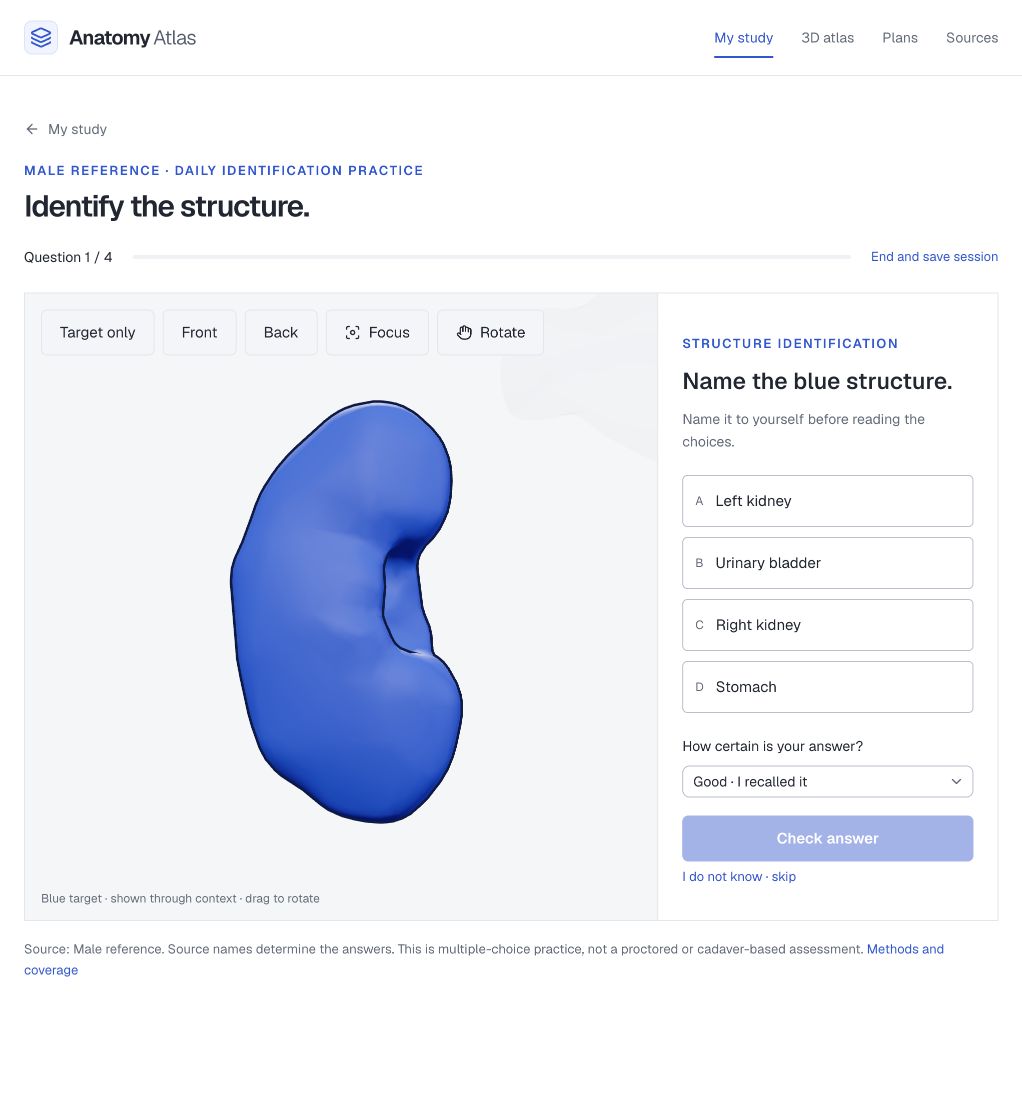
Practice that fits your day
One structure.
Your full attention.
A clear target. Four choices. Rotate the model before you answer, then check what you missed.
Want more practice? Plus adds timed sessions and reviews built around your mistakes.
Go to my studyStart free
Room to explore.
Room to go further.
Keep the atlas free. Add Plus when your course needs more.
Compare all features| Your study tools | Free | Plus |
|---|---|---|
| 3D atlas & quick quizzes | Included | Included |
| Course checklists | 1 | 10 |
| Structures per checklist | 50 | 500 |
| Saved reviews per day | 20 | 200 |
| Timed practice & mistake review | — | Included |
Try Plus for 7 days when you’re ready. No card. No charge.
Start with FreeBefore you start
A few useful answers.
Where does the anatomy come from?
The male model uses BodyParts3D. The female model uses Human Reference Atlas data. You can inspect source names and identifiers in the app. Coverage differs: the female skeleton and muscles are partial. Read about the models.
What can I use for free?
Both models, body systems, camera controls, labels, exploded views and quick quizzes. Sign in to save one checklist with up to 50 structures and answer 20 scheduled questions a day.
What happens after the Plus preview?
You return to Free. Your checklists and history stay saved. Nothing is charged automatically. Paid subscriptions are not open yet; proposed prices are on the plans page.
Can I use this to plan surgery?
This is a study tool using reference anatomy. It is not clinically validated for surgical planning. Quizzes assess identification of the model’s named structures, not clinical competence.